
For a first learning run, start with Warrior. Choose Mage for spells, Archer for ranged arrows or Bard for healing and team support. Read the starting weapon and skill conditions before confirming, then plan Super and Ultra separately.
Quick Guide
- Learning combat: Warrior is the starting recommendation for solo PvE.
- Spells or bows: compare Mage and Archer, including inputs and survival limits.
- Healing and team support: consider Bard for that role, not as the default solo pick.
- Read the current kit before confirming; Super and Ultra are later stages.
On this page
Which Pixel Lineage class should you choose?
Learning your first fights
Start with Warrior
The preview labels it Easy and protective. Its defensive kit still requires timing practice.
You want spell attacks
Inspect Mage’s starting kit
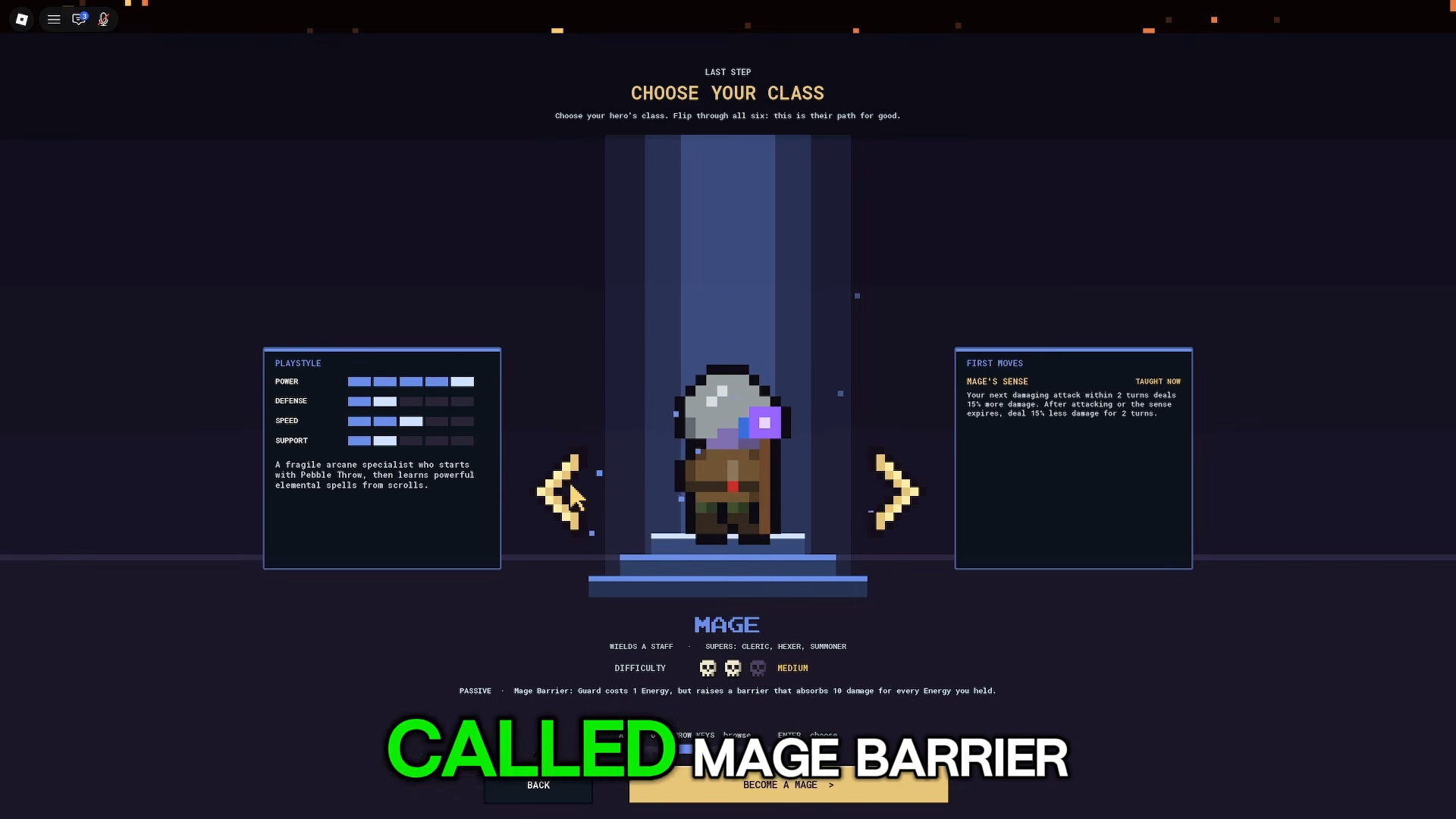
Choose for spell attacks; its defensive barrier depends on Energy.
You want ranged arrows
Compare Archer and Power Shot
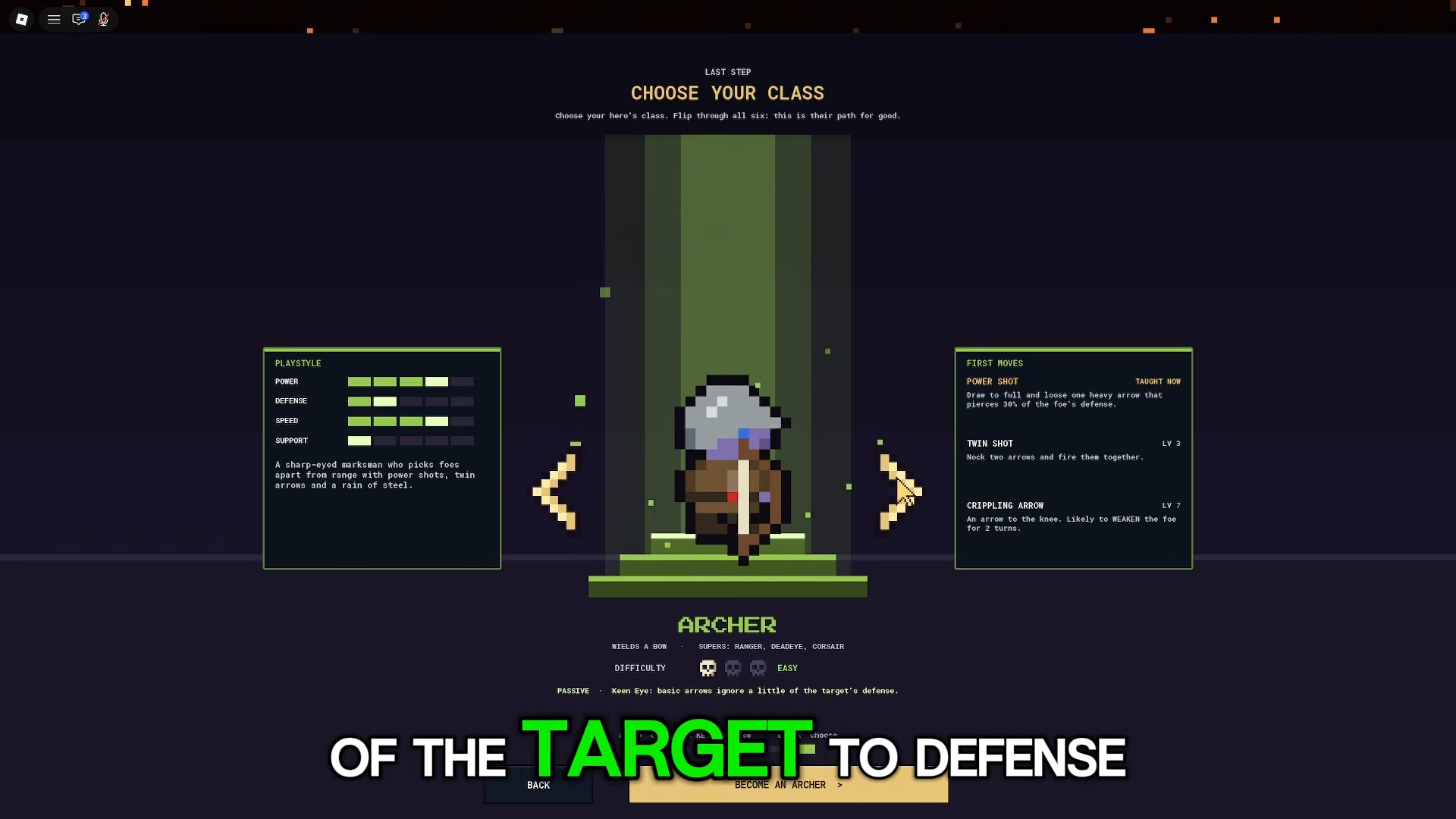
Choose for ranged arrows. Power Shot’s 30% defense penetration does not describe every basic arrow.
You want healing and team support
Consider Bard
Choose for healing and songs. Successful healing restores Energy; do not assume the two healing descriptions stack.
Already have a class? Find your next step
You have not chosen a starting class
Use the starting-class choices above
Choose the role you want, then read its skill conditions before confirming.
You have a base class and want to choose a Super path
Open the Super class steps
Browse the offered branches before confirming. The reviewed menu warns “one path, for good.”
You are Summoner with an Archon Sigil
Follow the Archon route
Match the Sigil to your class before AWAKEN. The route shows confirmation, the ARCHON result and wrong-class checks.
What can your starting class become?
Mage → Summoner → Archon is one documented route. It is not a complete tree for Mage or the updated roster. Compare the Super branches before choosing; the Archon route above starts from Summoner and checks the matching Sigil.
Pixel Lineage classes: six reviewed starting kits
Use the preview’s weapon and difficulty label to narrow your choice, then open one class page for its actual skill wording. Difficulty is a UI label, not a solo-clear ranking. Role descriptions below summarize the reviewed class screens; they are not a damage test.
| Class | Weapon | Difficulty label | Role / play style | Before you choose |
|---|---|---|---|---|
| Warrior | Sword | Easy | Defensive frontline; sword skills include defense-scaled moves. | Timing practice still matters; Easy is a menu label, not a clear-rate guarantee. |
| Thief | Dagger | Medium | Agile attacks, critical hits and back attacks. | Backstab can still be dodged, even when its hits are critical. |
| Mage | Staff | Medium | Arcane spells and an Energy-dependent barrier. | The defensive barrier depends on Energy. |
| Fist | Gauntlets | Hard | Precise multi-hit martial techniques. | Iron Fists excludes weapon and spell damage. |
| Archer | Bow | Easy | Ranged arrows and defense penetration. | Power Shot’s 30% penetration is not the basic-arrow passive. |
| Bard | Lute | Hard | Healing, buffs and disruptive songs. | Do not count the same successful-heal Energy wording twice. |
October 19: roster coverage
The official game title now includes Spear Class + Dragon Race. The six starting kits in this guide are the ones already reviewed here, not a complete claim about the updated roster. Spear’s current menu and branches have not been verified in our gameplay material.
Warrior: defensive frontline
Warrior is a sword user; the class-selection interface labels its difficulty Easy.
Warrior is the sword-based starting class with the highest defense bar in the selection preview. Its displayed moves focus on a defense-scaled bash and forcing enemies to target it.
Shoulder Bash scales with defense, while the opening passive lasts only until a direct hit. Read those two conditions together; a large opening defense bonus does not prove a permanent defense increase.
Thief: critical hits and back attacks
Thief is a dagger user; the class-selection interface labels its difficulty Medium.
Thief is the dagger-based starting class for critical hits and attacks from behind. Its critical-chance buff adds 25 percentage points of critical chance for three turns without changing turn order.
A guaranteed critical hit on Backstab is not the same as a guaranteed hit. The visible description still allows the target to dodge. Keep hit chance and critical chance separate.
Mage: elemental spell specialist
Mage is a staff user; the class-selection interface labels its difficulty Medium.
Mage is the staff-based starting class described as a fragile arcane specialist. The reviewed English video shows Mage’s Sense (called Mage’s Perception in the supplied translated capture) and an energy-spending defensive barrier; recorded builds are unknown.
The displayed attack buff has a follow-up penalty. Plan around both parts of that description; this page does not extend the bonus to every spell or claim a complete Mage rotation.
Fist: multi-hit martial techniques
Fist is a gauntlets user; the class-selection interface labels its difficulty Hard.
Fist is the gauntlet-based starting class for multi-hit martial techniques. Iron Fists adds 15% damage to unarmed/Fist basic attacks and Fist techniques, while explicitly excluding weapon and spell damage.
Read the damage source before counting an Iron Fists bonus. The English tooltip names eligible unarmed/Fist attacks and techniques, then excludes weapon and spell damage.
How to browse the class choices
The screen’s instructions use A/D or arrow keys to browse and Enter to select. Check the center class label before confirming; these captures do not establish reroll or class-change rules. Use the beginner guide to check the starting-run interface. Check the weapons directory for the displayed crafting and loot sources.
Starting class, super class and a new hero are different choices
Choose a starting kit in the class preview, then learn its attack prompt on a Normal run. When the Dungeon offers the Forgotten Dojo trainer event, the Warrior preview presents Berserk, Sentinel and Greatsword. This advances that Warrior path; it is not a menu for turning the same Warrior into a starting Mage.
The reviewed selection warns “one path, for good.” Browse the skills before confirming and use Later if you are undecided. The level-10 and level-14 labels in the path preview refer to later moves, not a demonstrated minimum level for entering the event. A task-complete reward screen is also separate from the actual selection button.
If your goal is a different starting kit, use the six individual class pages to compare its inputs before making a new-hero decision. OyO mentions another character or resetting, but the footage does not establish a safe, reversible class-reset action or what a reset preserves. The current-character change-class task therefore remains Pending confirmation.
Archer: ranged arrows and defense penetration
Archer is a bow user; the class-selection interface labels its difficulty Easy.
Archer is the bow-based starting class for ranged shots. Its Power Shot preview says it penetrates 30% of enemy defense, while the separate Keen Eye passive only says basic arrows ignore a little defense.
Do not apply Power Shot’s 30% figure to every basic arrow. The passive uses a separate, unquantified description, so each effect needs its own tooltip.
Bard: healing, buffs and disruptive songs
Bard is a lute user; the class-selection interface labels its difficulty Hard.
Bard is the lute-based starting class for healing, buffs and disruptive songs. Its Encore passive restores 1 Energy when healing succeeds; the selection preview shows the strongest support bar of the six documented choices.
Both Mending Melody and Encore mention successful healing and 1 Energy. Do not add them together into a claimed 2-Energy refund without a real combat result.
Six starting classes in the selection menu
The creator cycles through the starting classes. Pause the selection menu to compare visible role bars and first moves; this is not a class ranking or a combat test.
Warrior super classes in the Dungeon
Warrior can preview Berserk, Sentinel and Greatsword at the Forgotten Dojo trainer event. The Warrior guide explains the route entry, permanent-choice warning and skill unlock previews; the six classes above remain the starting-character choices.
Journey task: Choose a Super Class reward
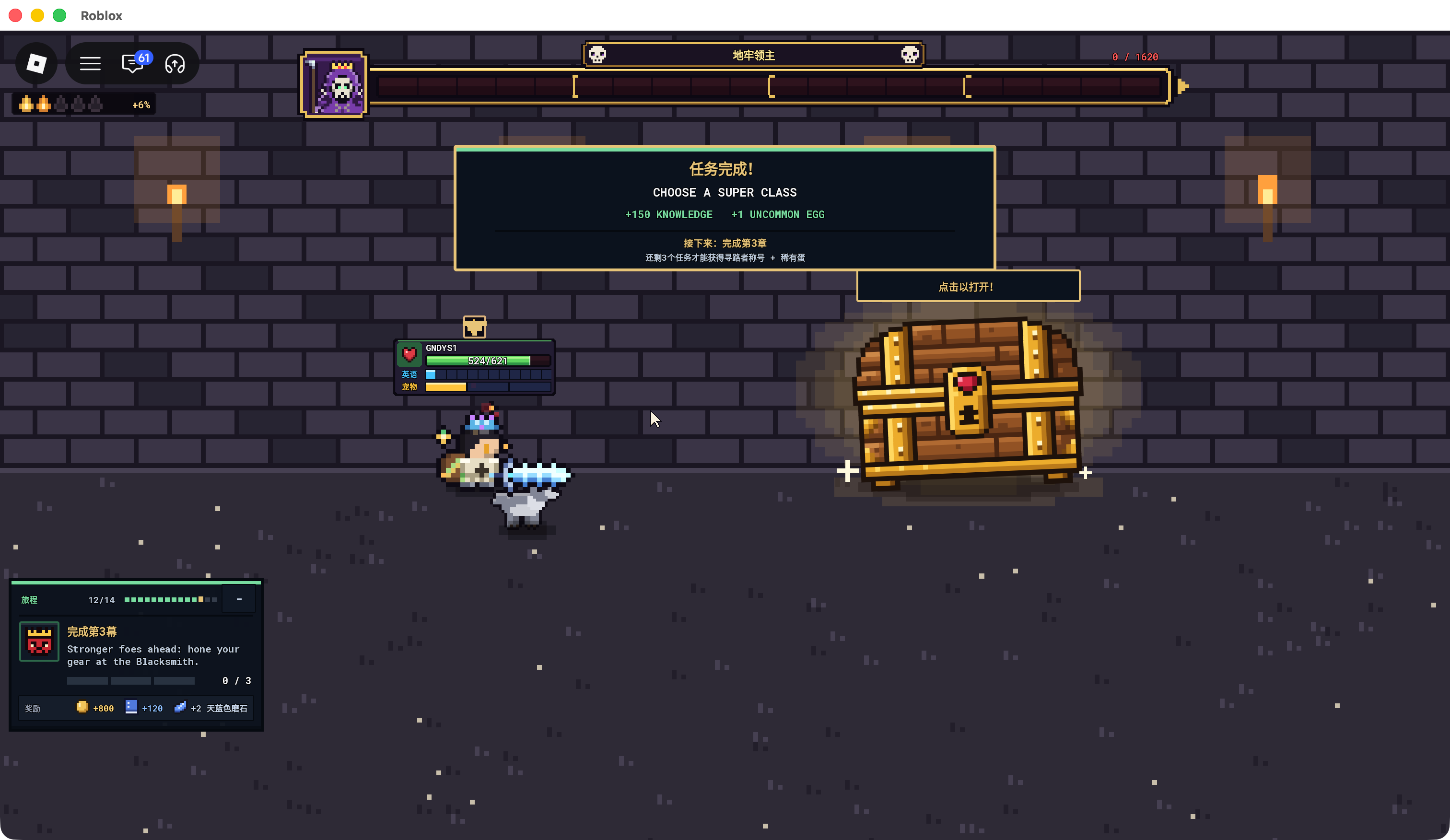
After the Chapter 2 victory in this run, a task-complete popup says CHOOSE A SUPER CLASS and awards +150 Knowledge and +1 Uncommon Egg, with Complete Chapter 3 shown next. This is a journey-task reward, separate from the boss chest and the Chapter 2 completion reward.
The captured popup does not show a new class being selected at that moment. Follow the existing Warrior super-class section for the reviewed Forgotten Dojo choices, and the beginner guide for the Chapter 2 boss and chest sequence.
Choose a build after choosing a role
A weapon name and difficulty label answer different questions from a damage ranking. Use the best class guide for broad recommendations and races guide when a race affects your plans. Open the Warrior class page, Mage class page, Archer class page or Bard class page for the recorded starting kit; the separate Mage Build and Bard Build guides cover those existing build pages. The Mage preview separates its Energy-dependent barrier from Mage’s Sense (shown as Mage’s Perception in the supplied translated capture). Read both effects instead of importing a complete rotation from a spoken summary.
The separate tier list compares solo PvE within each stage; the progression guide explains when to handle Super and Ultra.
Sources and roster coverage
Six starting previews are documented here. Advanced-class unlock costs, tested best builds and current-version rankings need separate evidence; the recorded build is unknown.
Sources
Reviewed:
Includes player-supplied gameplay reviewed 14 October 2026. Older cited material retains its own date; the game build is unknown.